
Why Online Estimates Fail: Automated Valuation Models vs. Local Appraisals
Niki Medlin August 24, 2026
Niki Medlin August 24, 2026
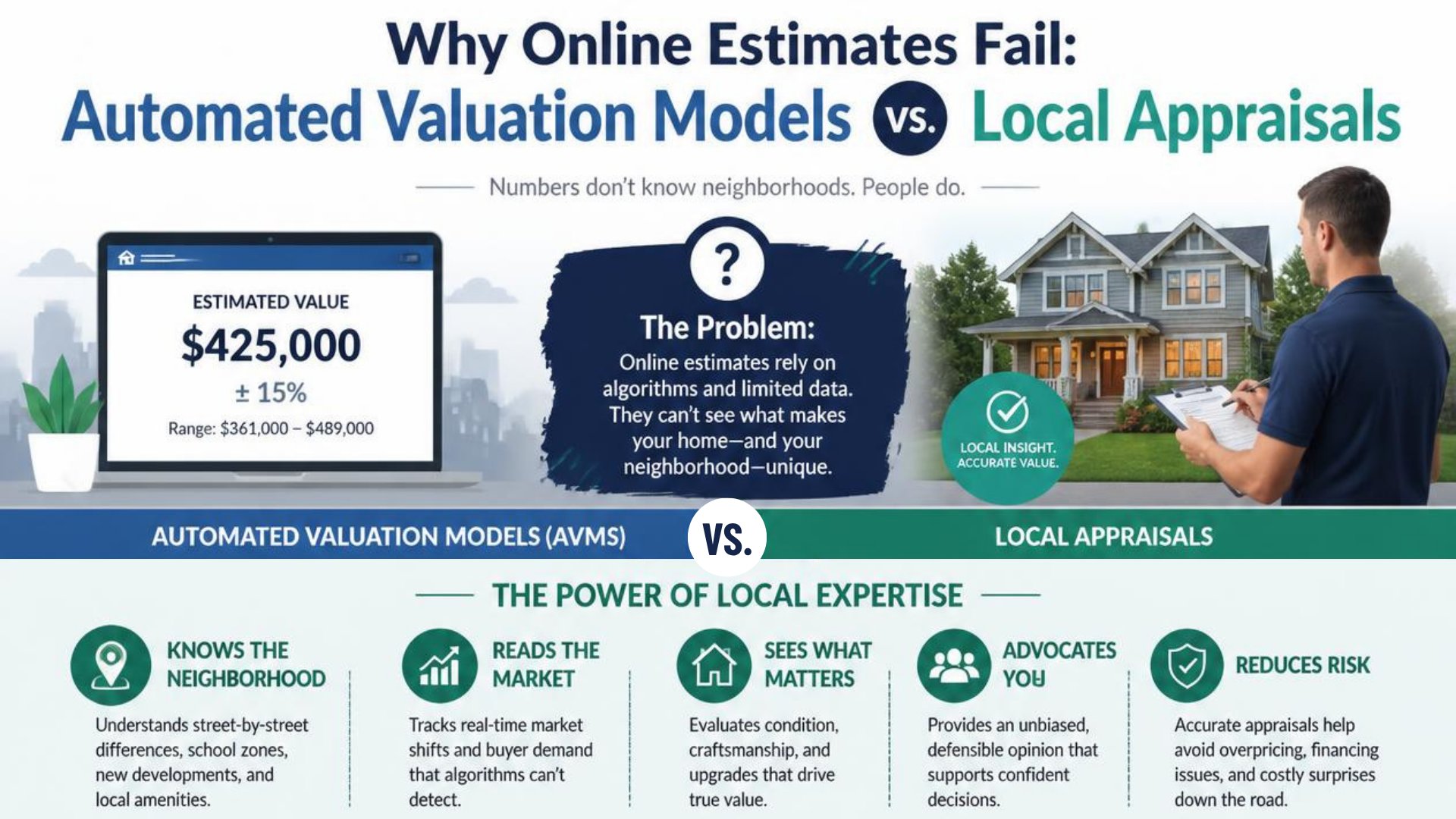
If you own a luxury waterfront estate on Siesta Key, a canal home in Venice, or a high-rise condo on Lido Beach, you have probably scrolled through real estate websites to check your home's "estimated value."
These computer-generated figures are known as Automated Valuation Models (AVMs). While they work fine for uniform suburban subdivisions, they are notoriously inaccurate when it comes to high-value, coastal, and waterfront real estate. Here is why those online algorithms consistently fail, and how professional valuations find the true numbers.
Waterfront values are heavily driven by the quality, angle, and orientation of their water views. An AVM uses public geographic coordinates, but it cannot "see" what makes a property special:
High-value marine infrastructure is a major driver of property value, yet online estimators have zero record of its physical condition, age, or presence.
Following Florida's post-Surfside safety legislation, the valuation of local condominiums has been fundamentally rewritten. Under state laws (SB-4D, SB-154, and HB-1021), all condo buildings three habitable stories or taller must undergo Milestone Structural Inspections.
Because online estimates are blind to these critical factors, relying on them can lead to costly pricing mistakes. Professional valuations use a more disciplined approach:
These computer-generated figures are known as Automated Valuation Models (AVMs).

Active single-family listings are rising, currently settling around 4.4 months of supply.

The assistance is structured as a deferred, zero-interest second mortgage.
It has its own town centers, medical center, and highly active commercial hubs.
Here’s a curated list of some of Sarasota’s best-kept culinary secrets.

Setting the right price is one of the most important factors in selling quickly.
Benefit from proven market knowledge, thoughtful strategy, and personalized guidance every step of the way—helping you understand true value, navigate the market with confidence, and make decisions aligned with your goals.

Niki Medlin
50 S Lemon Ave Ste 302 Sarasota, FL 34236 Preferred SHORE Real Estate